


US Carrier Strike Group and Warplanes Mass Near Iran as Tensions Rise Ahead of Talks
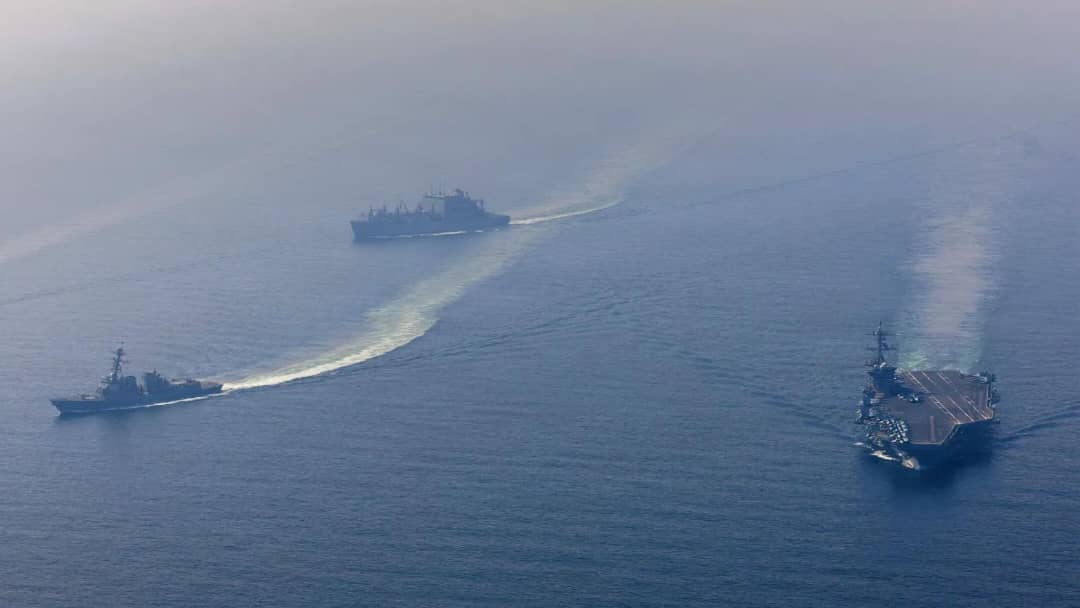
The US Navy has positioned a formidable carrier strike group and surged fighter jets and support aircraft into waters and skies near Iran, satellite imagery and official releases show, underscoring rising military pressure as Washington and Tehran prepare for a second round of talks in Switzerland.
Satellite confirmation and force composition
BBC Verify analyzed European Sentinel-2 satellite imagery and confirmed the location of the nuclear-powered aircraft carrier USS Abraham Lincoln in the Arabian Sea, roughly 150 miles (about 240 km) off Oman’s coast and approximately 700 km from Iran. The carrier, which reportedly deployed to the Gulf in late January, had not previously been captured in open-source satellite imagery until these recent passes.
The Abraham Lincoln leads a carrier strike group that includes three Arleigh Burke-class guided-missile destroyers and carries roughly 90 aircraft — including F-35s — and about 5,680 crew. US Central Command published images on 6 February showing the carrier operating with destroyers, fighter jets, surveillance aircraft and coastguard vessels in an apparent display of force.
The Lincoln’s presence adds to an observable US naval build-up in the region. Open-source satellite tracking and imagery now account for 12 US ships operating in or near the Middle East theater: the Abraham Lincoln strike group; multiple destroyers capable of long-range strikes; three littoral or specialist combat ships stationed at Bahrain’s naval facilities in the Gulf; two destroyers seen in the eastern Mediterranean near Souda Bay, Crete; and a further US warship observed in the Red Sea.
Airpower and logistics also increased. Analysts and imagery indicate a notable uptick of F-15s and EA-18G Growler electronic warfare jets at Muwaffaq Salti Air Base in Jordan, alongside expanded movements of US cargo, refueling tankers and communications aircraft routing from the United States and Europe toward the Middle East.
Reinforcements en route
US defense sources have also reported the movement of the USS Gerald R. Ford — the world’s largest warship and namesake of the new Ford-class carriers — toward the region, with assessments suggesting it could arrive within approximately three weeks, further bolstering carrier capability in the theater.
Context: diplomacy amid deterrence
The military deployments come as US and Iranian delegations prepare to meet in Switzerland for a second round of talks. Tehran has framed the discussions primarily around its nuclear program and the prospect of US sanctions relief. Washington has signaled an interest in broadening the agenda to address other security and regional concerns. The proximity and scale of US forces in the Gulf and nearby seas appear intended both to deter escalation and to provide rapid options should crises emerge as diplomacy proceeds.
Iranian countermeasures and demonstrations of strength
Tehran has responded with its own displays of military capability. The Islamic Revolutionary Guard Corps (IRGC) conducted maritime drills in the Strait of Hormuz, one of the world’s most critical energy transit chokepoints, where roughly one-fifth of global oil and gas shipments pass. State-linked Tasnim News Agency footage showed IRGC Commander‑in‑Chief Maj. Gen. Mohammad Pakpour inspecting naval vessels, helicopters over Kharg Island — Iran’s main oil export terminal — and missile launches from surface ships, signaling Iran’s readiness to contest freedom of navigation and to defend maritime approaches.
Strategic implications
The converging signals — increased US carrier and surface combatants, a surge in tactical and support aircraft, and reciprocal Iranian drills — heighten regional risk even as diplomats seek negotiation. The deployments provide the US with expanded surveillance, strike and escort capabilities throughout the Arabian Sea, Persian Gulf approaches and adjacent maritime corridors, while Iranian exercises emphasize Tehran’s capacity to threaten shipping lanes and oil export infrastructure.
What to watch next
- The outcome and scope of the Switzerland talks: whether they remain narrowly nuclear-sanctions focused or expand into wider regional security issues.
- Movements of additional US assets such as the Gerald R. Ford and any re-deployments of destroyers or support ships.
- Any escalation in maritime incidents in the Strait of Hormuz, the Gulf of Oman or the Red Sea that could affect commercial navigation or prompt rapid military responses.
- Signals from regional partners — Gulf states, NATO elements in the eastern Mediterranean, and bases in the Middle East — about force posture changes or diplomatic mediation attempts.
As diplomacy and deterrence play out in parallel, the recent satellite confirmations and official imagery make clear that both Washington and Tehran are reinforcing military postures while engaging in high-stakes negotiations, leaving the region on alert for sudden shifts in tempo or confrontation.






0 Comment(s)